About pink
Pink (#FFC0CB) is a warm, light, highly saturated color. It belongs to the pinks family. It mixes 255 red, 192 green and 203 blue (out of 255). It is mostly used in fashion, kids, branding.
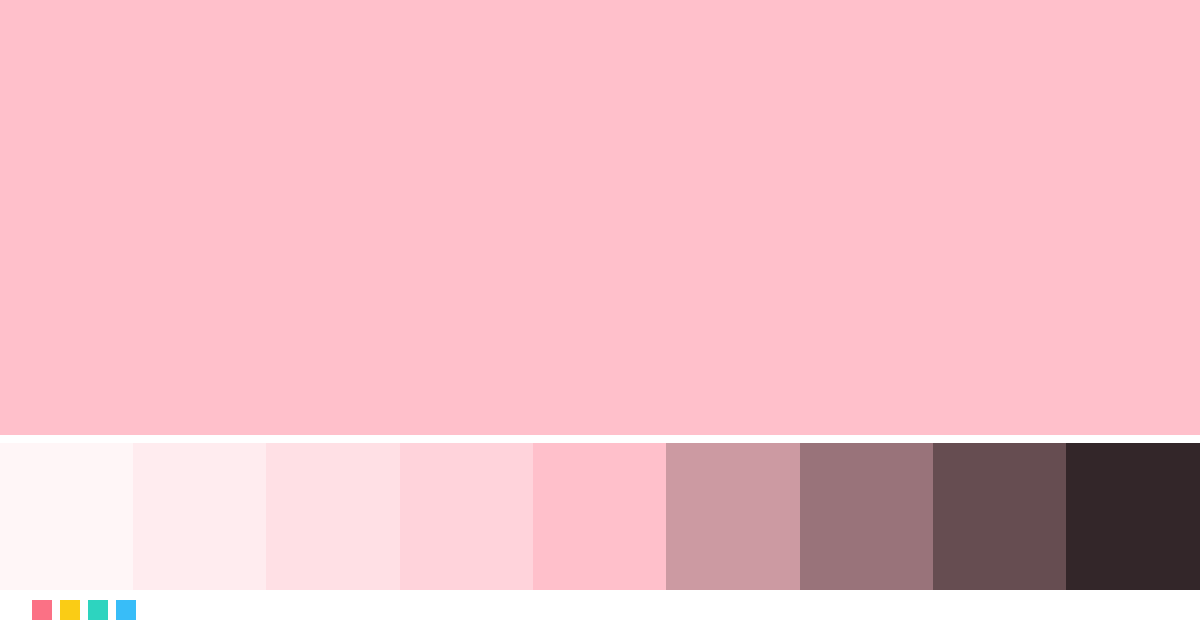
A red lightened with lots of white. It's associated with tenderness and romance, though today it's used by all kinds of brands. It's common in clothing, cosmetics and awareness campaigns.
The hex code for pink is #FFC0CB. In RGB it is rgb(255, 192, 203), in HSL hsl(350, 100%, 88%) and in CMYK 0, 25, 20, 0.
Pick a color to pair it with and see how it looks on clothes, interiors and design.
Pink (#FFC0CB) is a warm, light, highly saturated color. It belongs to the pinks family. It mixes 255 red, 192 green and 203 blue (out of 255). It is mostly used in fashion, kids, branding.
From lightest to darkest. Tap a shade to copy its code.
See all its shades: Color shades generator
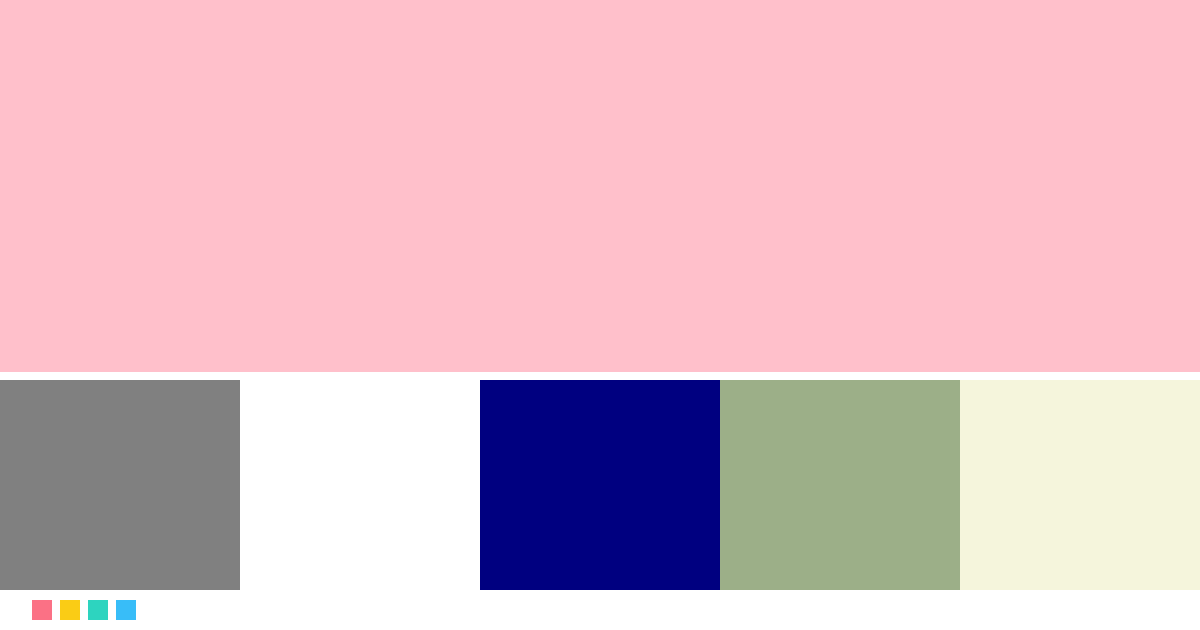
Combinations based on the color wheel. More in the color harmony tool.
Copy the codes or open a palette in the editor to tweak it.
Based on WCAG 2.1 guidelines. Test other pairs in the contrast checker.
:root {
--pink: #FFC0CB;
--pink-rgb: 255, 192, 203;
}
.bg { background-color: var(--pink); }
.text { color: var(--pink); }
The hex code for pink is #FFC0CB. In RGB it is rgb(255, 192, 203), in HSL hsl(350, 100%, 88%) and in CMYK 0, 25, 20, 0.
Its complement on the color wheel is #C0FFF4, close to duck egg blue. Used in small doses, it works as an accent and adds strong contrast.
Use black text instead: the contrast with white is only 1.5:1, while with black it is 13.7:1.
It pairs well with gray, white, navy blue, sage green, beige. Avoid pairing it with intense red or bright orange without a neutral, because pink looks dull. With too many other pastels it can look childish.
We use Google Analytics cookies to understand how the site is used. Is that OK? Learn more