About turquoise
Turquoise (#40E0D0) is a cool, mid-tone, moderately saturated color. It belongs to the turquoises family. It mixes 64 red, 224 green and 208 blue (out of 255). It is mostly used in jewelry, home decor, fashion.
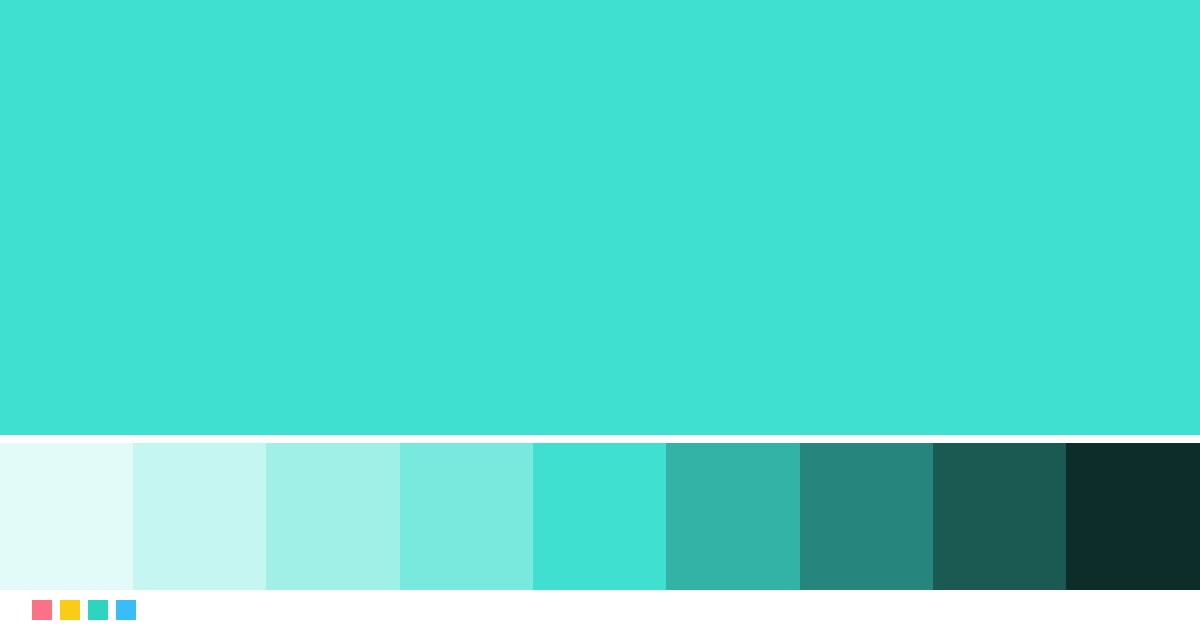
Named after the turquoise stone, which reached Europe by way of Turkey. It blends blue and green with lots of light. It evokes Caribbean beaches and shows up in jewelry, summer clothing and coastal decor.
Also known as: turquoise blue.
The hex code for turquoise is #40E0D0. In RGB it is rgb(64, 224, 208), in HSL hsl(174, 72%, 56%) and in CMYK 71, 0, 7, 12.
Pick a color to pair it with and see how it looks on clothes, interiors and design.
Turquoise (#40E0D0) is a cool, mid-tone, moderately saturated color. It belongs to the turquoises family. It mixes 64 red, 224 green and 208 blue (out of 255). It is mostly used in jewelry, home decor, fashion.
From lightest to darkest. Tap a shade to copy its code.
See all its shades: Color shades generator
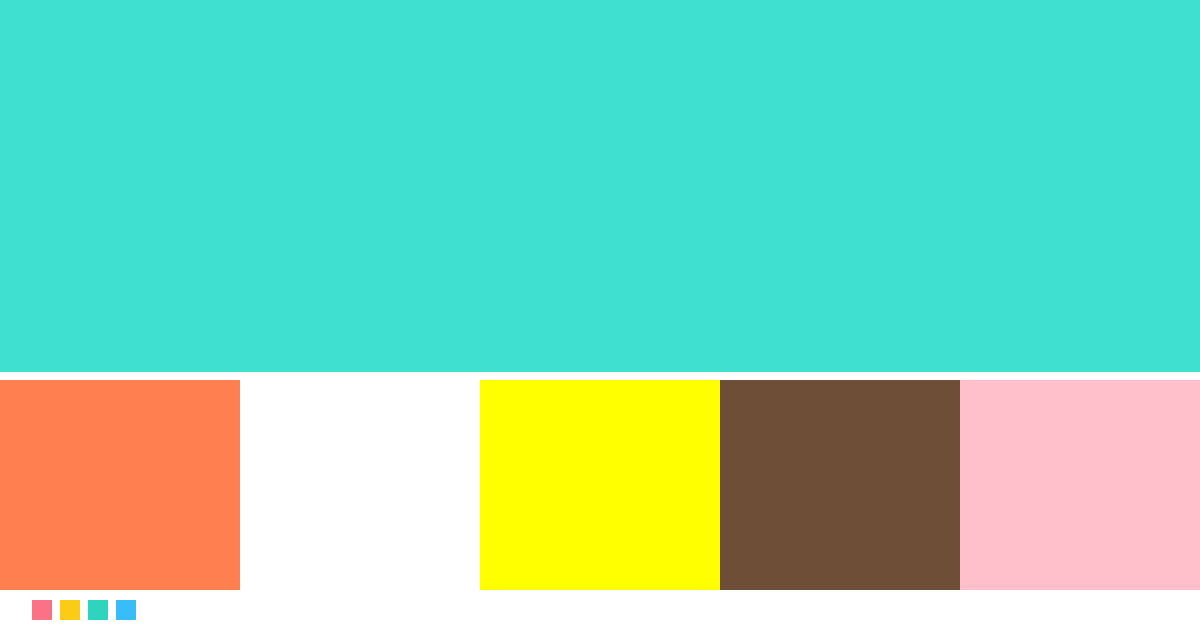
Combinations based on the color wheel. More in the color harmony tool.
Copy the codes or open a palette in the editor to tweak it.
Based on WCAG 2.1 guidelines. Test other pairs in the contrast checker.
:root {
--turquoise: #40E0D0;
--turquoise-rgb: 64, 224, 208;
}
.bg { background-color: var(--turquoise); }
.text { color: var(--turquoise); }
The hex code for turquoise is #40E0D0. In RGB it is rgb(64, 224, 208), in HSL hsl(174, 72%, 56%) and in CMYK 71, 0, 7, 12.
Its complement on the color wheel is #E04050, close to amaranth. Used in small doses, it works as an accent and adds strong contrast.
Use black text instead: the contrast with white is only 1.6:1, while with black it is 12.8:1.
It pairs well with coral, white, yellow, coffee brown, pink. Avoid pairing it with equally saturated greens or blues, because it looks busy. With black it can look aggressive if you use a lot of turquoise.
We use Google Analytics cookies to understand how the site is used. Is that OK? Learn more