About orange
Orange (#FF8000) is a warm, mid-tone, highly saturated color. It belongs to the oranges family. It mixes 255 red, 128 green and 0 blue (out of 255). It is mostly used in logos, signage, web, sports.
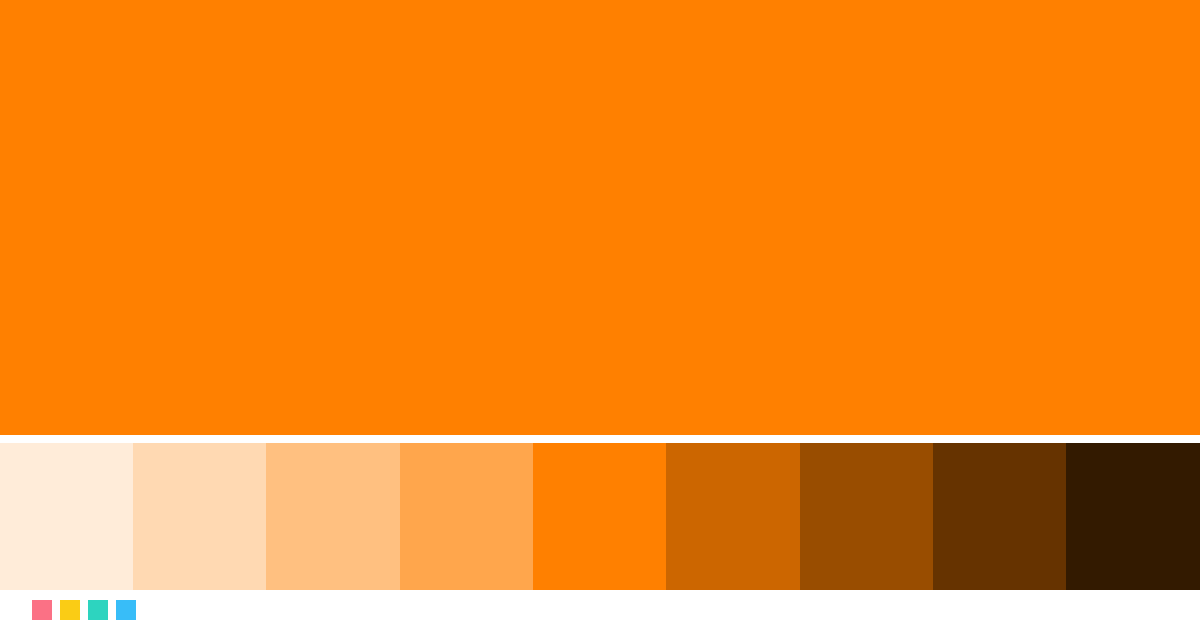
Named after the fruit, which reached Europe from Asia by way of the Arabic naranj. It blends the energy of red with the cheerfulness of yellow. It's common on safety vests, sales signs and brands that want to feel friendly.
The hex code for orange is #FF8000. In RGB it is rgb(255, 128, 0), in HSL hsl(30, 100%, 50%) and in CMYK 0, 50, 100, 0.
Pick a color to pair it with and see how it looks on clothes, interiors and design.
Orange (#FF8000) is a warm, mid-tone, highly saturated color. It belongs to the oranges family. It mixes 255 red, 128 green and 0 blue (out of 255). It is mostly used in logos, signage, web, sports.
From lightest to darkest. Tap a shade to copy its code.
See all its shades: Color shades generator
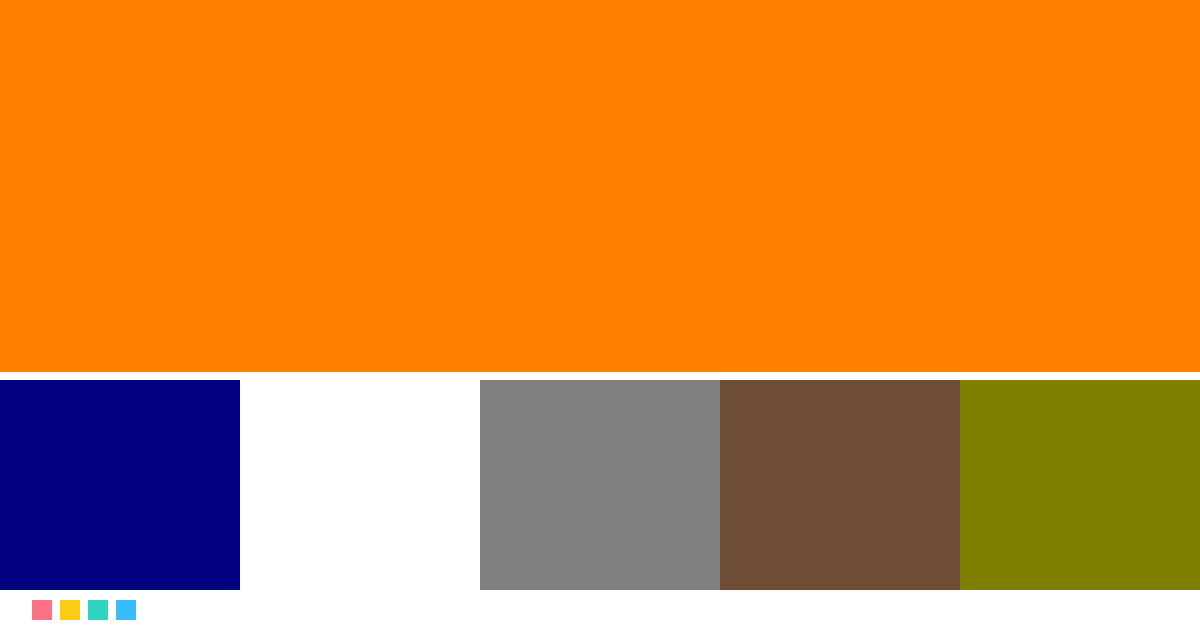
Combinations based on the color wheel. More in the color harmony tool.
Copy the codes or open a palette in the editor to tweak it.
Based on WCAG 2.1 guidelines. Test other pairs in the contrast checker.
:root {
--orange: #FF8000;
--orange-rgb: 255, 128, 0;
}
.bg { background-color: var(--orange); }
.text { color: var(--orange); }
The hex code for orange is #FF8000. In RGB it is rgb(255, 128, 0), in HSL hsl(30, 100%, 50%) and in CMYK 0, 50, 100, 0.
Its complement on the color wheel is #007FFF, close to azure. Used in small doses, it works as an accent and adds strong contrast.
Use black text instead: the contrast with white is only 2.5:1, while with black it is 8.3:1.
It pairs well with navy blue, white, gray, coffee brown, olive green. Avoid pairing it with red or hot pink without neutrals, because the look gets loud. With bright yellow it can be too much.
We use Google Analytics cookies to understand how the site is used. Is that OK? Learn more